











First impressions now form in seconds, and in 2027 many of them happen inside an app, a chat window or an AI assistant before a customer ever reaches your website. That is why UX design has become a leadership topic and not only a design topic. Executives who understand user experience make better calls on products, portals and websites, and they build things customers return to.
So what does UX design involve? Is it the surface beauty of a product, or is it about what people do and feel while they use it? In this guide we explain what UX design is, what has changed going into 2027, and how it shapes your business results. If you want to improve product usability or build a stronger connection with your audience, this is where to start.
What is UX Design?
User experience design, or UX design, is the practice of improving the experience of a person using a product or service. It covers how something works, how easy it is to understand and how it feels to use, from the first screen to the last step of a task.
Testing and refining designs based on real user behavior and feedback sits at the center of effective UX design. Businesses build stronger relationships with their audience when they redesign their products, portals or mobile apps around the experiences of the people who actually use them. In 2027 that also includes the conversational and AI-assisted parts of a product, which need the same care as any screen.
Fundamental Principles of UX Design
Usability in UX Design
Usability is the focal point of user experience design. It brings ease of understanding, navigation and interaction into a product. Good user interfaces (UI) remove unnecessary steps that waste a user’s time and make sure people can reach their goal comfortably. Thoughtful layouts, clear flows and simple designs improve usability and remove frustration.
Accessibility in UX Design
Great UX design is inclusive, so a product can be used by people of different abilities and ages. In practice that means support for screen readers, full keyboard navigation, sufficient color contrast, captions on video and text that resizes without breaking the layout. The W3C’s WCAG 2.2 guidelines are the reference most teams design to.
Accessibility is also a legal matter now. The European Accessibility Act has applied since 28 June 2025 to many products and services sold to consumers in the EU, including e-commerce and banking. If you sell to European customers, accessible design is part of doing business there.
Consistency in UX Design
Users expect cohesion across a brand’s website, app and every other touchpoint. Familiar components let people move through a product quickly and comfortably, because they can draw on what they already know instead of learning a new system each time. This is why a shared design system matters: it keeps buttons, type, spacing and patterns consistent as a product grows.
User Feedback & Engagement in UX Design
Feedback gives users a sense of control, which is critical to product usability. A button that responds, a clear error message and a visible loading state all tell people the system has heard them. On the business side, analytics, session recordings and user testing show teams where the experience breaks, so they can fix it.
Good UX design goes beyond looks. It shapes how users feel about a product, how natural the interactions are and how well the company performs. For a deeper look at the rules behind these principles, see our guide to the laws of UX.
What Is Changing in UX Design in 2027
The principles above have not changed, but the products they apply to have. Here is what we see shaping UX work going into 2027:
- AI features inside everyday products. Assistants, smart search and generated summaries are now common. Users need to know what the AI is doing, how to correct it and how to reach a person when it gets something wrong.
- Accessibility as a requirement. With regulation such as the European Accessibility Act in force, accessible design is checked at launch, not added later.
- Mobile-first, then everything else. Most journeys start on a phone, so flows are designed for small screens and one-handed use first.
- Performance as part of the experience. Heavy pages and slow apps lose people. Fast load times are a design decision as much as an engineering one.
- Privacy and trust. Clear consent, plain-language data choices and no dark patterns are now part of what users expect from a brand they trust.
Importance of UX Design for Business
Every business faces tough competition, which is why it needs to focus on UX design. Effective UX leads to higher customer satisfaction and a better overall experience, which builds loyalty.
A good experience affects how a brand is perceived and helps build strong relationships with customers, which leads to a positive brand image.
As digital products take on more of the customer relationship, business leaders need to understand UX design, especially for growth and long-term sustainability.
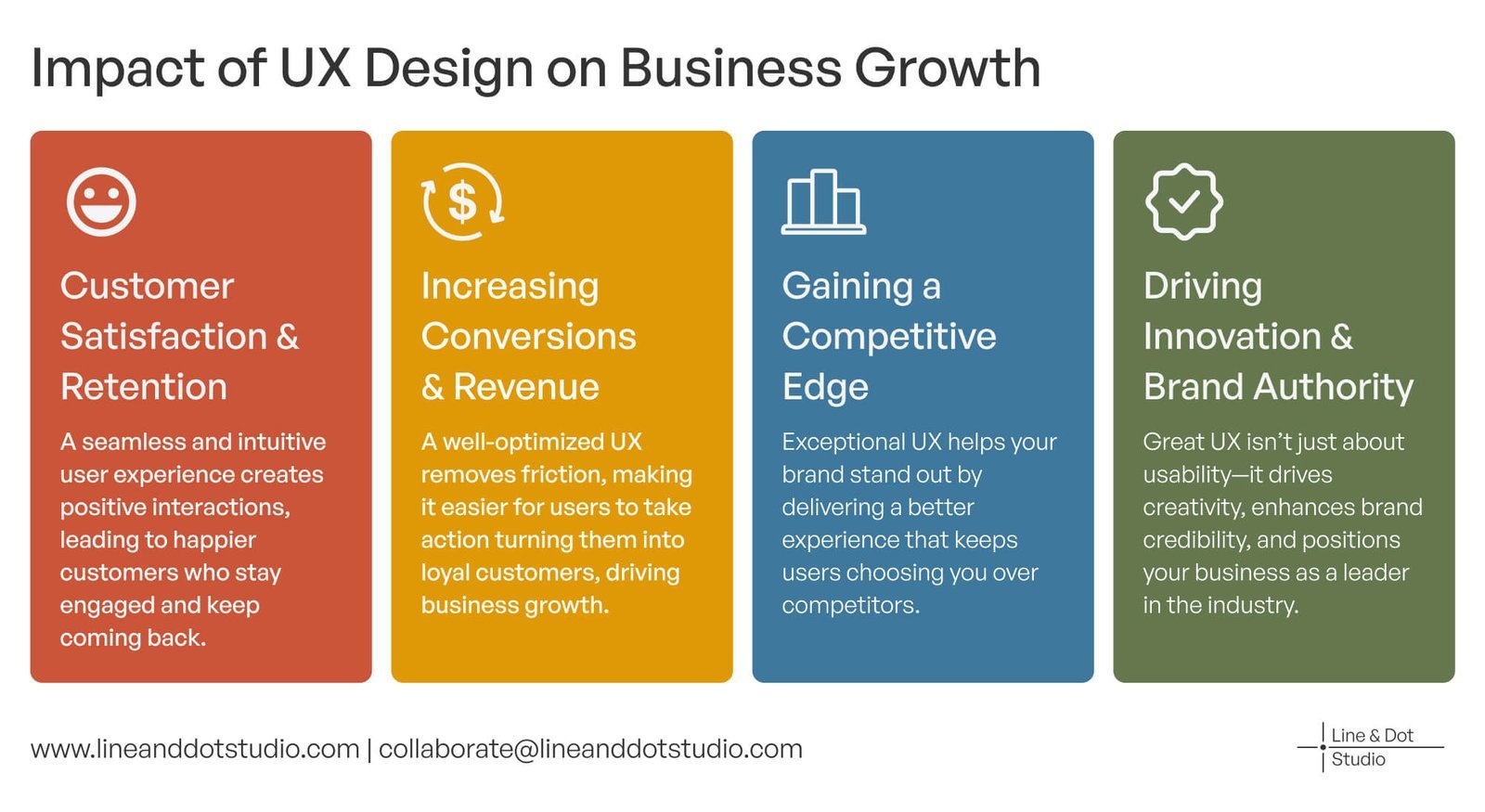
How UX Design Impacts Business Growth
Improving Customer Satisfaction and Retention
Easy-to-use UI/UX design raises customer satisfaction. When users find what they are looking for without effort, their overall experience improves substantially.
Satisfied users feel more positive about the brand, and that loyalty extends beyond a single product to the brand as a whole. A positive brand experience brings people back more often. We cover this in more depth in how good UX design improves customer retention.
Increasing Conversions & Revenue
Effective UX design can grow revenue because it makes a product easier to use. When a website or app is easy to use, people are more likely to complete the actions that matter, such as buying a product or subscribing.
A positive user experience also reduces cart abandonment. Clearer navigation, a simpler checkout and responsive interfaces build engagement and trust in the brand. Start with these practical website UX tips to improve conversions.
Gaining a Competitive Edge
In crowded markets, a product that is easier and more pleasant to use stands out. Organizations that focus on better user experiences can serve more clients and earn recognition for it.
A strong first experience stays with people. This is why some products and apps build such loyal customer bases: using them feels effortless.
Driving Innovation & Brand Authority
Businesses with exceptional user experiences earn positive referrals, which encourages them to keep improving. Regular improvements to the experience make users feel valued and raise brand recognition without heavy marketing spend.
By prioritizing and investing in UX, a business can position its brand as an authority in its industry.
Planning a new product, app or website for 2027?
What Affects the Design of UX
User research and understanding of the target audience
User research is one of the most important inputs to a product’s user experience. Designers create experiences that connect with users when they understand who those users are.
Knowing your users goes beyond demographics to their goals, habits and frustrations. Surveys, interviews and usability tests are essential parts of that discovery work.
Listening to users shows which problems they are actually trying to solve. When real experiences take precedence over assumptions, teams build meaningful solutions.
Usability and Accessibility in UX Design
Usability and accessibility stand out among the many factors in UX design. Good usability means users can move through a product or service with ease and never hit a dead end, with clear guidance at each step.
Designing for ease of use, compatibility and adjustability widens the audience a product can serve. Considering these factors early in development also saves the time and cost of later revisions.
Visual Design and Aesthetics
Good visual design influences how users interact with a product while staying aligned with the brand’s core message. A strong visual identity makes users more comfortable engaging with the brand.
Color, type and imagery work together to create that connection. Managed well, they improve comprehension and make interactions clearer. Small details matter here too, as our piece on micro-interactions in UX design explains.
These choices should also be inclusive, so the product works well for every user. Good visual design is pleasing to look at and presents information sensibly, so users get what they need without confusion.
Technology and platform constraints
Every platform has limits that shape the user experience. Designers need to account for operating system capabilities, screen sizes, input methods and ergonomics across phones, tablets, desktops and wearables.
Performance matters as well. Users get irritated and leave when a product loads slowly because of heavy visuals, so designers and developers need to balance rich visuals against speed.

Examples of Companies with Strong UX Design
These companies show how effective UX design lifts engagement and satisfaction, and how it keeps them ahead in competitive industries.
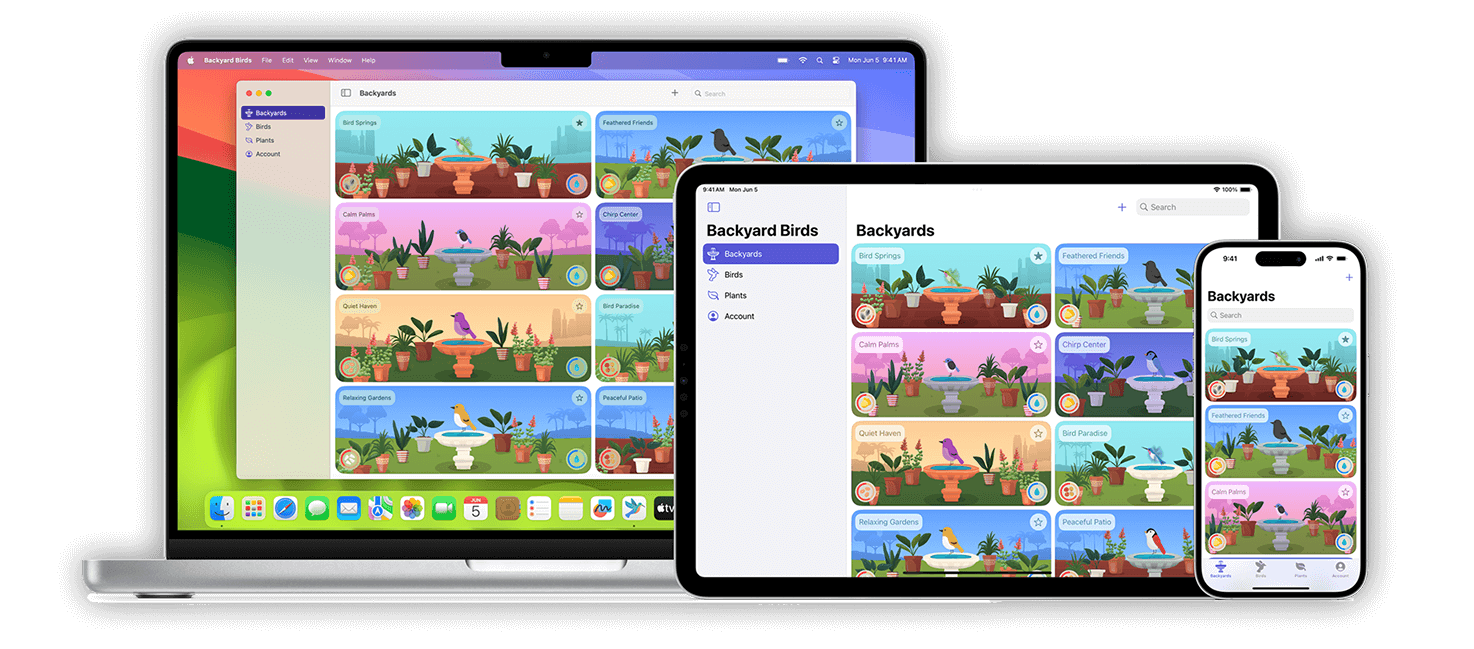
User Experience at Apple
Apple’s devices, from the iPhone to the MacBook and iPad, show how much a careful user experience shapes the way people relate to technology.
Apple sets itself apart with clear icons, buttons and motion that make technology feel approachable rather than overwhelming. In June 2025 it introduced Liquid Glass, a single design language across iOS, iPadOS, macOS, watchOS and tvOS. Apple called it its broadest software design update ever, and it shows how seriously the company treats consistency across every screen.
Its ecosystem is one of its strongest points. Users can start an email on an iPhone and finish it on a MacBook, share photos with AirDrop or take calls on an iPad. That continuity saves time and encourages people to keep using Apple devices.
User Experience at Airbnb
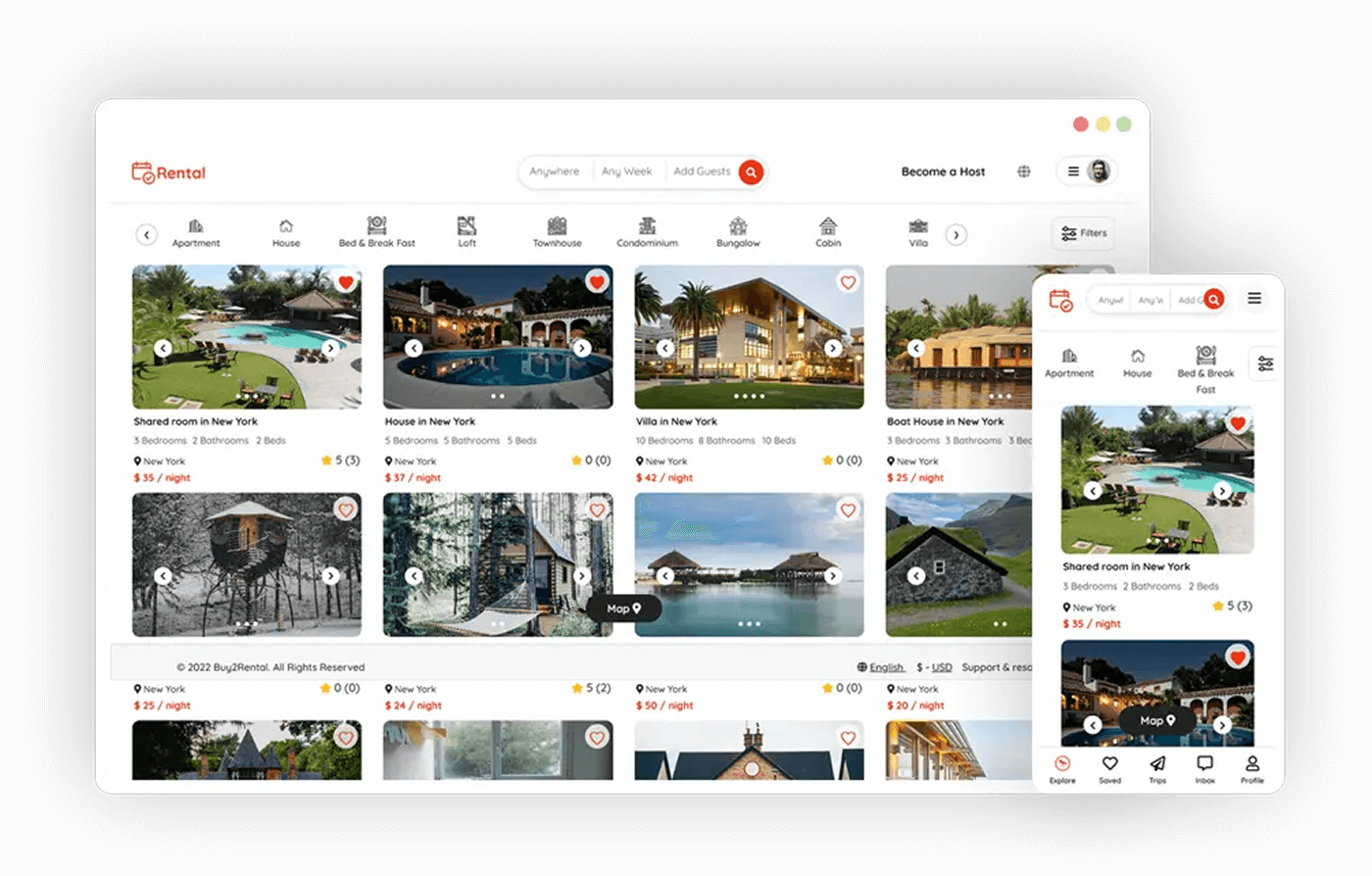
Airbnb uses a user-centered, iterative design process so that every interaction feels natural, safe and easy to understand. It starts with in-depth research into how travelers behave, what problems they face and what they expect from the platform.
The company refines everything from search filters to booking flows with data-driven insights and A/B testing, so users can find and book a stay easily. Its UX team prioritizes visual clarity and accessibility, with a clean layout, simple navigation and high-quality images. When Airbnb rebuilt its app in its 2025 Summer Release to add services and experiences alongside homes, it kept the same simple browsing pattern, so guests could book everything in one place.
Its 2026 Summer Release went further with AI summaries of guest reviews, shared trip plans for groups and an AI support assistant that works in 11 languages. A mobile-first approach, built-in messaging and fast booking make trip planning easy, and by testing its designs with real users, Airbnb keeps setting the bar for digital hospitality.
User Experience at Amazon
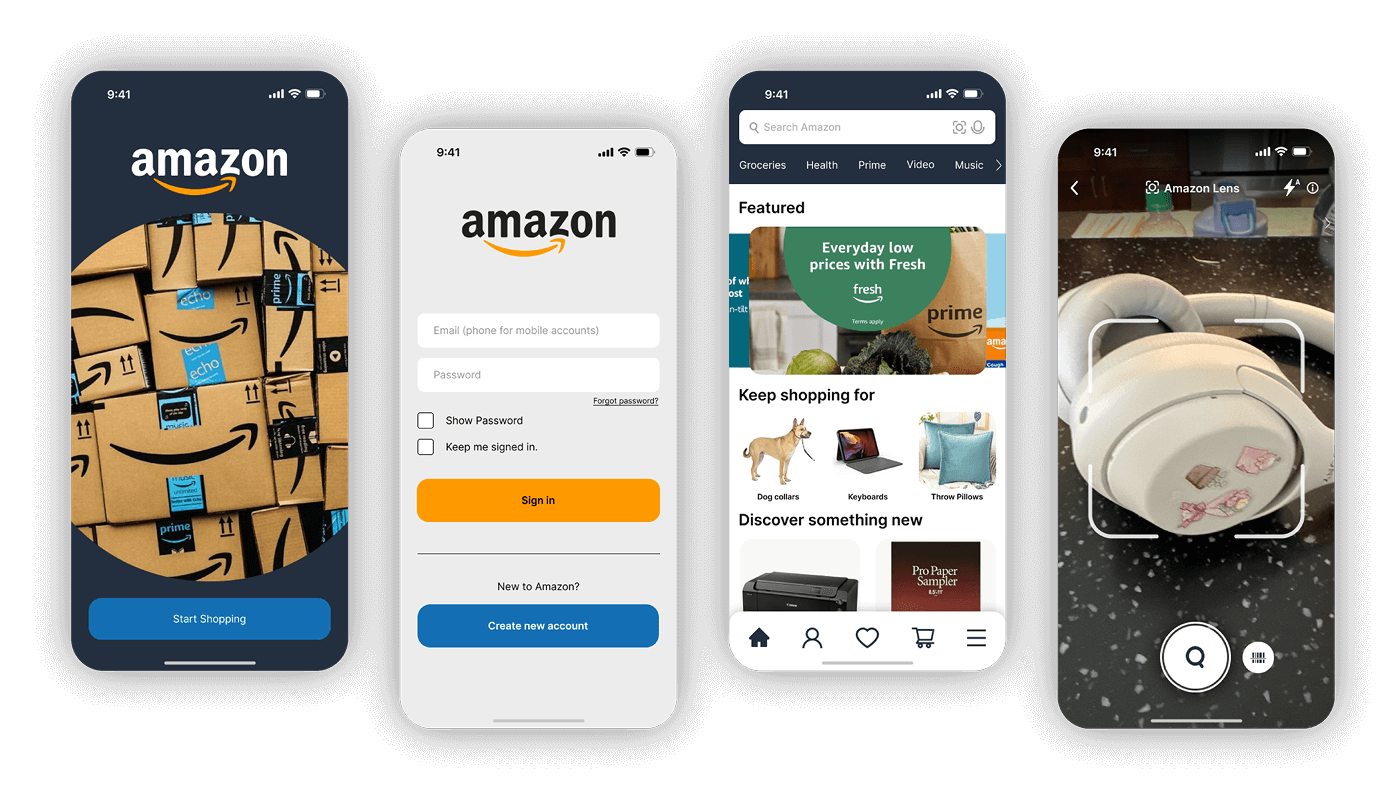
Amazon’s UX design focuses on speed, simplicity and personalization, which makes it one of the most widely used e-commerce experiences in the world. Its process rests on extensive user research and analysis of shopping patterns and friction points.
Personalization is central. Recommendations and tailored homepages make shopping feel more relevant. Its AI shopping assistant, launched as Rufus in 2024 and renamed Alexa for Shopping in May 2026, answers product questions, shows price history and can add items to the cart without leaving the shopping flow. Clear return policies, visible seller ratings and detailed product reviews help buyers make informed decisions and build trust.
Why Investing in UX Design is Important for Business Leaders
For business leaders, investing in UX design is critical in a fast-moving, competitive market. The experience a user has with your product sets your brand apart and expresses its purpose and values.
Businesses that focus on UX create loyal customers. Satisfied customers keep using the product or service and recommend it to others.
Investment in quality design pays off over time. Satisfied customers tend to spend more and stay longer, which supports revenue and lowers churn. The returns may not show up immediately, but they build steadily as the user base grows through repeat visits and recommendations, without the same reliance on marketing spend.
The right UX practices raise customer satisfaction and open the path for innovation and growth. It is an approach every leader should take seriously when planning their products and services for 2027. If you are ready to start, our UI/UX design team can help you plan it.
Frequently Asked Questions
Ready to improve your product’s user experience in 2027?
Our UI/UX team designs apps, portals and websites around how your users actually behave.
